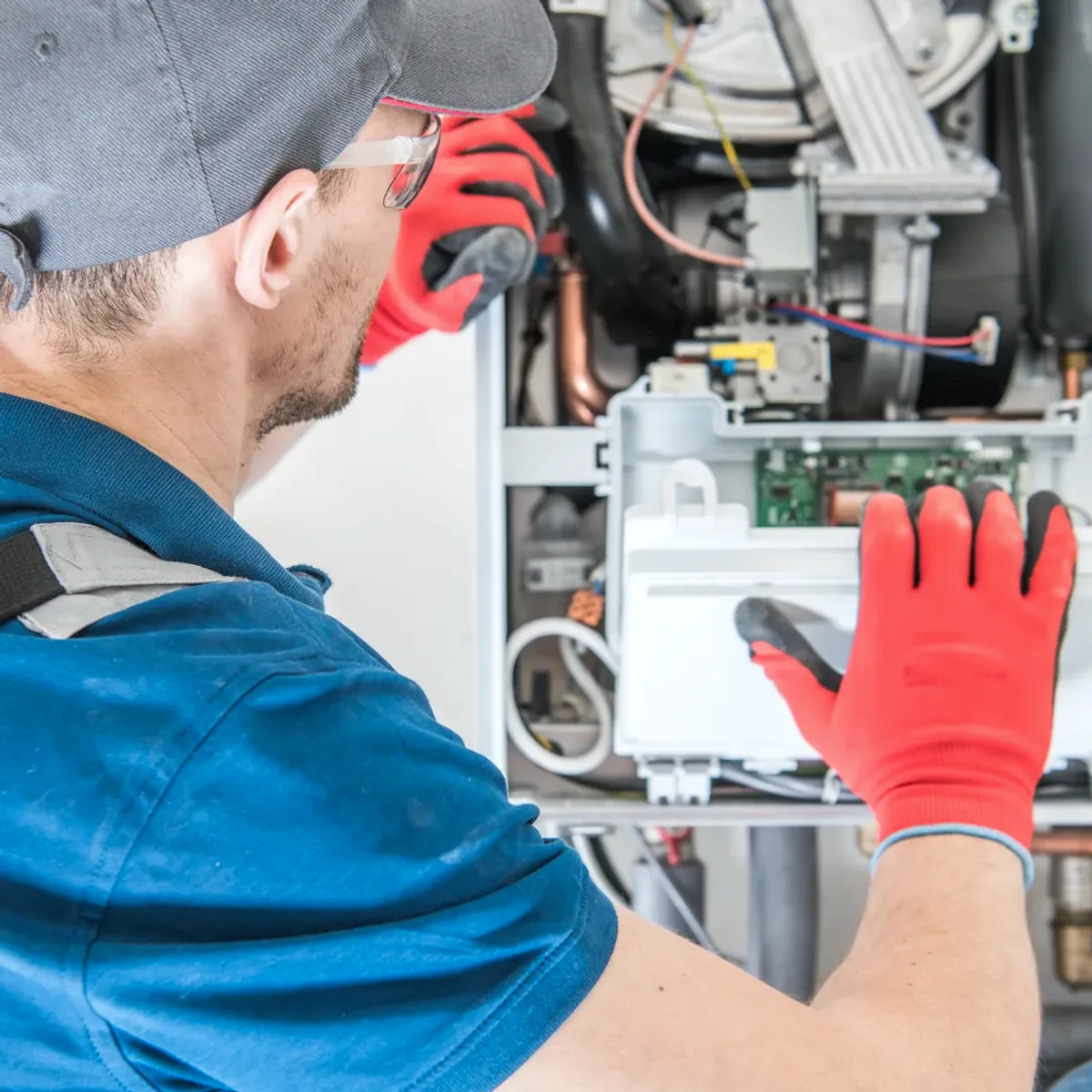
Is the boiler failing to heat, leaking, losing pressure, or being considered for replacement?
Boiler symptoms and installation choices depend on the boiler type and the hydronic system it serves. A natural-draft cast-iron boiler feeding radiators differs from a condensing boiler connected to in-floor loops, and fuel may be gas, propane, or oil. Cold radiators, leaks, or changing pressure call for diagnosis before parts are replaced. For a new boiler, the existing distribution system, venting, fuel, and controls shape compatibility. Maintenance should follow manufacturer instructions and inspection findings, not an automatic flush schedule.
Assessment should identify the boiler model, fuel, venting arrangement, and whether heat is distributed through radiators or in-floor loops. Cold emitters, a relief-valve drip, and pressure loss can point to different issues, including ignition, circulator, expansion-tank, or leak faults. These findings guide repair and safety decisions. For replacement, compatibility with the distribution system and controls matters as much as the boiler's rated output.
Gas, propane, and oil boiler repair faults
Cast-iron and condensing boilers serving radiators or in-floor loops
Inspection-led maintenance and replacement decisions
Assessment and Scope
Questions for the Proposed Work
01
Distinguish ignition, circulation, and pressure faults
Cold radiators or in-floor areas may reflect an ignition problem, a circulator fault, an air or flow issue, or a pressure-related leak; the symptom alone does not identify the cause. A dripping relief valve and pressure that repeatedly falls also need investigation rather than repeated topping up. Record which areas are affected and whether the boiler starts. Fuel and combustion components require qualified service, while the diagnosis should establish the failed part before repair is chosen.
02
Match a replacement boiler to the distribution system
A cast-iron boiler serving radiators and a condensing boiler serving in-floor loops may have different venting, temperature, and control requirements. If replacement is being considered, identify the existing boiler type, fuel, distribution layout, and controls before choosing equipment. A condensing model must be suited to the connected hydronic system and installation conditions. The decision should be based on compatibility and system condition, not an assumption that every older boiler needs the same replacement.
03
Base maintenance and replacement decisions on findings
Inspection can reveal whether service is needed at the burner, ignition system, controls, relief valve, or expansion tank. Maintenance tasks such as cleaning or flushing should follow the boiler manufacturer's instructions and the condition of the hydronic loops; flushing is not automatically required every year. If there is evidence of unsafe venting, a leak, or serious component damage, continued operation and replacement need careful evaluation. A repairable isolated fault does not by itself require a new boiler.
Compare the next step
Have the new room heat loss and proposed emitter output assessed with the existing hydronic system. Ask what pump, valve, piping, and control changes the added zone requires, and whether existing zones remain properly supplied. A quotation should explain the completed heating arrangement and how each affected zone will be checked after the addition is occupied.
Leave fuel, combustion, electrical, and pressure-system work to a qualified contractor. Do not adjust safety devices or repeatedly add water to a system with an unexplained leak or pressure loss.